SOAP Progress Notes Template
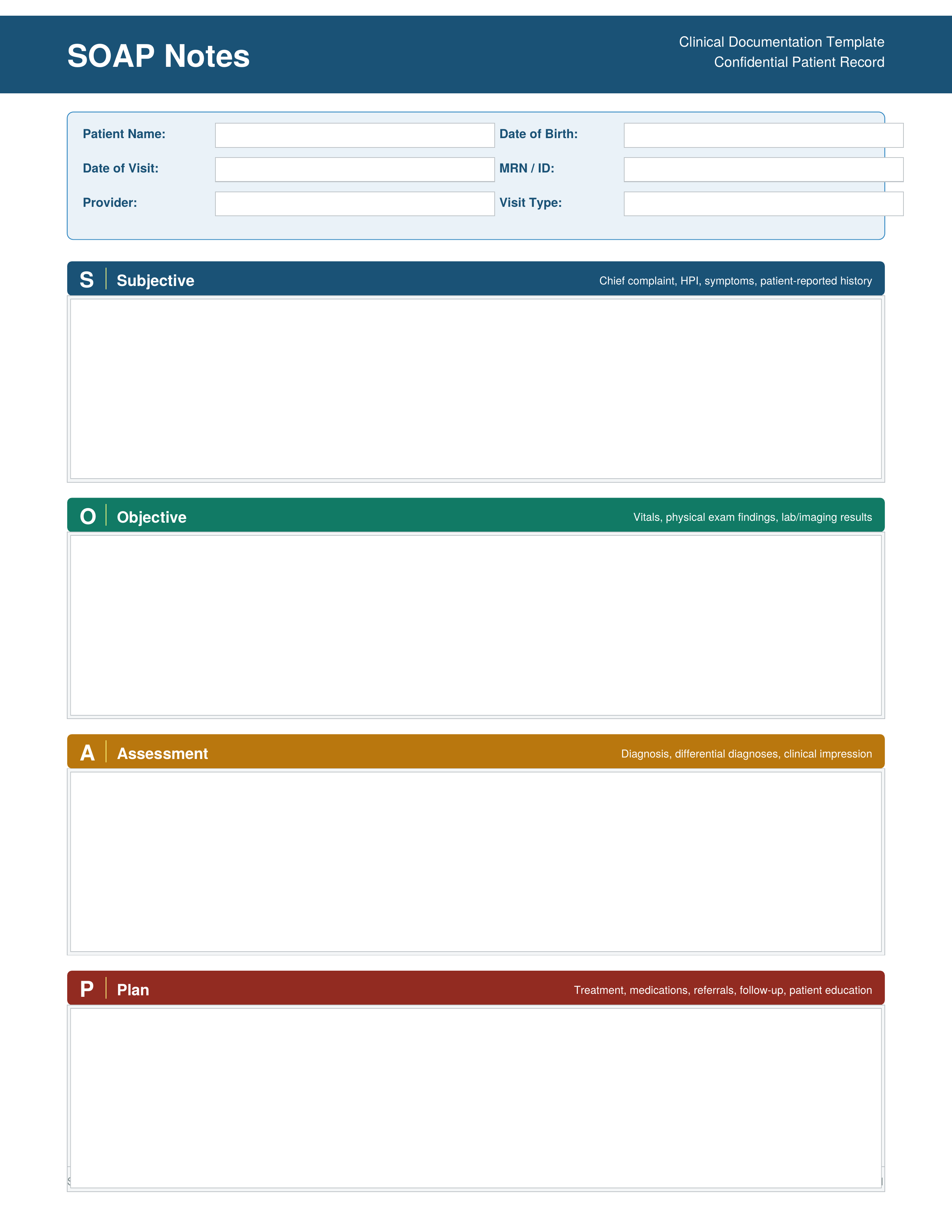
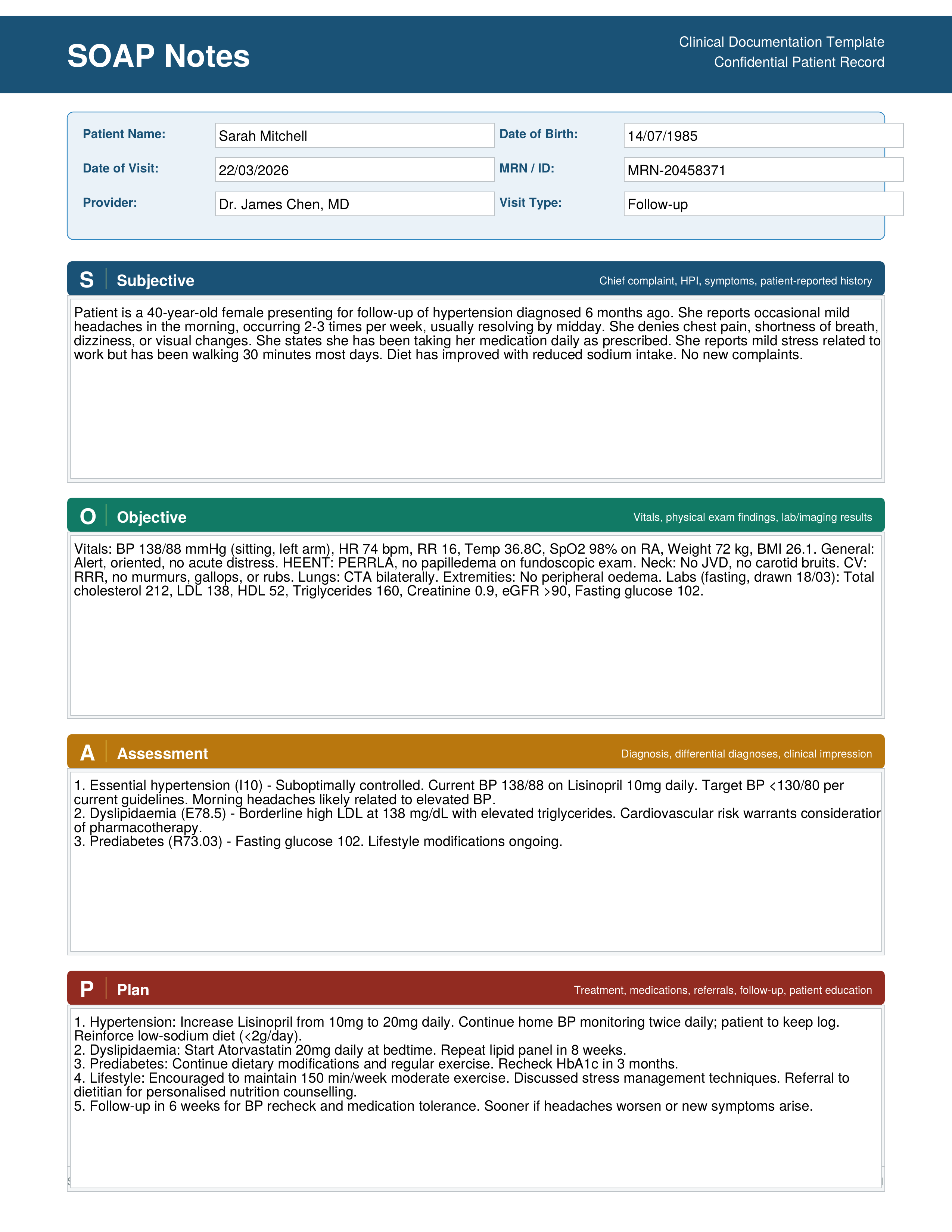
Keeping thorough, well-organised clinical notes is one of the most important habits you can build as a practitioner. Our free SOAP Progress Notes Template gives you a ready-made structure so you can spend less time on paperwork and more time with your clients.
Download the template below and read on to learn how SOAP notes work, how to fill them out effectively, and best practices for getting the most out of this documentation method.
What are SOAP notes?
SOAP is an acronym that stands for Subjective, Objective, Assessment, and Plan. It is a widely adopted method for structuring clinical progress notes across allied health disciplines including physiotherapy, osteopathy, chiropractic, psychology, and speech pathology.
Each section serves a distinct purpose, and together they create a complete record of every patient encounter.
Subjective
The subjective section captures what the patient tells you. This includes their chief complaint, reported symptoms, pain levels, how the condition affects their daily activities, and any changes since the last visit. Where possible, include direct quotes from the patient to preserve the original context of their words.
Example: "The pain in my lower back has improved since last week, but I still feel stiffness when I wake up in the morning. I'd rate it a 4 out of 10."
Objective
The objective section records your clinical findings — the measurable, observable data gathered during examination. This includes:
- Vital signs and physical measurements
- Range of motion testing
- Postural observations
- Palpation findings
- Functional assessments and special tests
- Results from imaging, lab work, or screening tools
This section should contain facts, not opinions. If you measured it, observed it, or tested it, it belongs here.
Assessment
The assessment is where you bring together the subjective and objective data to form your clinical reasoning. This section typically includes:
- Your working diagnosis or updated diagnosis
- Interpretation of findings and how they relate to the patient's complaint
- Whether the patient is progressing, plateauing, or regressing relative to treatment goals
- Any contributing or complicating factors
Think of the assessment as the narrative that connects what the patient reported to what you found, and what it all means for their care.
Plan
The plan outlines the next steps. It should detail:
- Treatment provided during the session (techniques, modalities, exercises)
- Modifications to the ongoing treatment plan
- Home exercise programs or self-management advice
- Referrals to other practitioners or for further investigations
- Frequency and timing of the next appointment
- Short-term and long-term goals
A clear plan ensures continuity of care regardless of who reviews the notes next.
How to use this template
Step 1: Download the template
Click the download button on this page to get the SOAP Progress Notes Template as a PDF. You can print it for in-clinic use or fill it out digitally.
Step 2: Complete the patient details
Start each note by recording the patient's name, date of birth, the date of the session, and your name as the treating practitioner. Consistent identification details make notes easy to file and retrieve.
Step 3: Work through each SOAP section
Document the encounter by completing each section in order:
- Subjective — Record the patient's symptoms, concerns, and any updates in their own words.
- Objective — Note your examination findings, measurements, and test results.
- Assessment — Summarise your clinical reasoning and the patient's progress.
- Plan — Outline treatments performed, next steps, and goals.
It is perfectly normal for some sections to be longer than others depending on the nature of the visit.
Step 4: Sign and store
Add your name, signature, and any relevant provider details at the bottom of the note. Store the completed note securely — ideally in your practice management software where it is linked to the patient's file and protected by appropriate access controls.
Best practices for writing SOAP notes
Be specific and concise. Avoid vague language like "patient is doing better." Instead, document measurable changes: "lumbar flexion increased from 40° to 55° since last visit."
Write notes promptly. Complete your notes as soon as possible after the session while the details are fresh. Delaying documentation increases the risk of inaccuracies and omissions.
Use consistent terminology. Stick to accepted clinical terms and abbreviations relevant to your discipline. This reduces ambiguity and ensures your notes are understood by any practitioner who reads them.
Keep objective data objective. Reserve opinions and interpretations for the assessment section. The objective section should only contain findings you can measure, observe, or verify.
Connect your assessment to the evidence. Your assessment should clearly flow from the subjective and objective sections. Avoid introducing new information in the assessment that was not documented earlier in the note.
Make the plan actionable. Every plan entry should answer: what is being done, by whom, when, and why. Vague plans lead to gaps in care.
Review and audit regularly. Periodically review your notes for consistency and completeness. Good documentation protects both your patients and your practice in the event of audits, complaints, or insurance queries.
Why use SOAP notes in your practice?
SOAP notes offer several advantages for allied health practitioners:
- Consistency — Every encounter follows the same logical structure, making records easier to write and review.
- Communication — Clear notes improve handoffs between practitioners and support multidisciplinary care.
- Clinical reasoning — The format encourages you to connect symptoms, findings, and treatment decisions in a structured way.
- Compliance — Well-documented notes satisfy requirements from professional bodies, insurers, and regulators.
- Efficiency — A familiar format reduces the mental effort required to document each session, especially when paired with templates or practice management software.
Frequently asked questions
What is a SOAP progress note?
A SOAP progress note is a structured clinical documentation format divided into four sections: Subjective, Objective, Assessment, and Plan. It provides a consistent framework for recording patient encounters and tracking progress over time.
Who uses SOAP notes?
SOAP notes are used across a wide range of health professions including physiotherapy, osteopathy, chiropractic, psychology, occupational therapy, speech pathology, and general practice. Any practitioner who documents clinical encounters can benefit from the SOAP format.
How long should a SOAP note take to complete?
With practice and a good template, most SOAP notes can be completed in five to ten minutes. Using practice management software with built-in SOAP note fields can reduce this further by eliminating formatting decisions and storing patient context automatically.
Can I customise the SOAP format for my discipline?
Absolutely. While the four-section structure remains the same, the specific content within each section will vary depending on your profession. A psychologist's subjective section will look different from a physiotherapist's, and that is expected. Adapt the template to capture the information most relevant to your clinical practice.