Occupational Therapy SOAP Note Examples: 4 Settings, Template and Goals
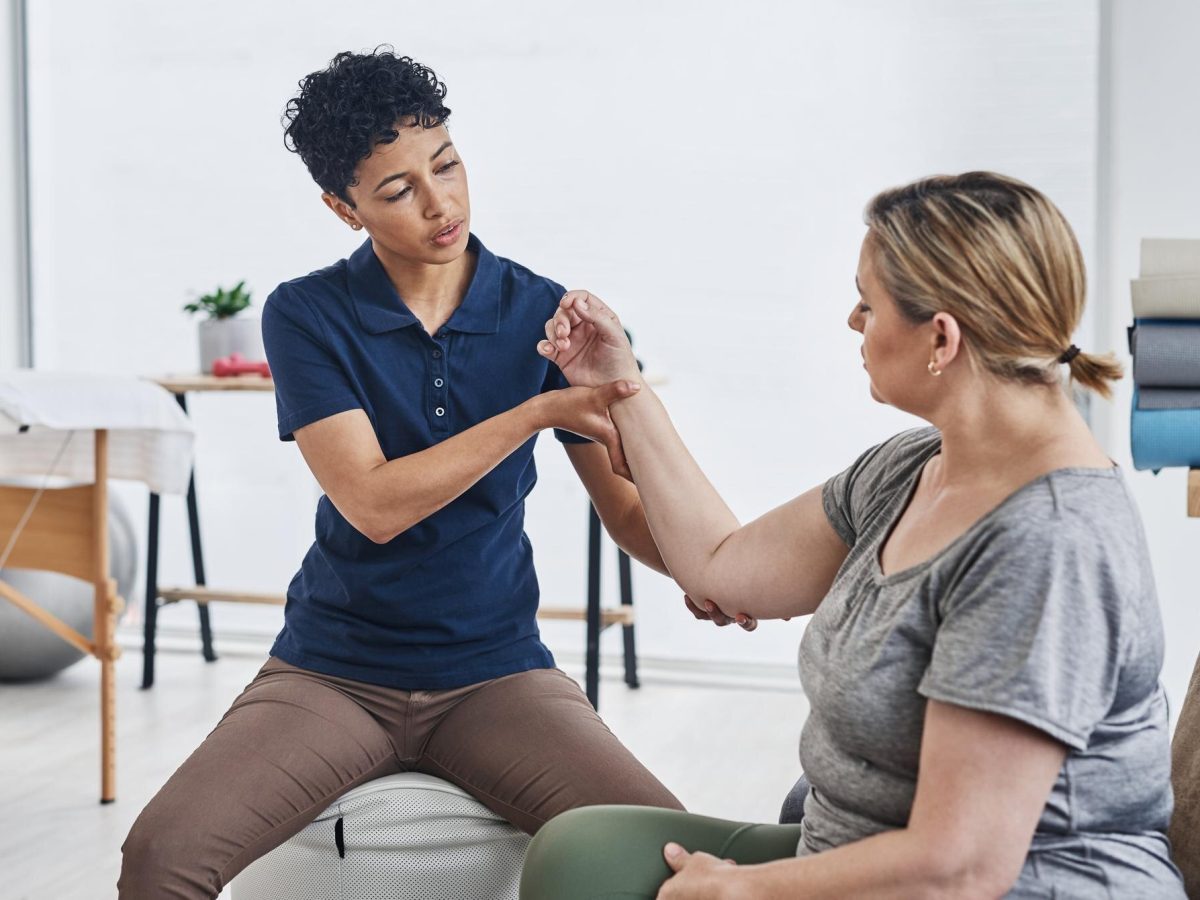
Most occupational therapy SOAP note examples online are either a single generic sample or a scraped PDF that's hard to read. This guide gives you four realistic, fictional examples from different OT settings (pediatric outpatient, hand therapy, inpatient rehab and a home visit), a template you can copy, and tips for writing each section so the note shows what skilled occupational therapy did for the client's function.
Every client, name and measurement below is invented for illustration. They show how to document, not what treatment to give.
What makes an OT SOAP note different
SOAP stands for Subjective, Objective, Assessment and Plan. Every profession uses the same four headings, but a good occupational therapy SOAP note keeps coming back to one question: what can this person do in their daily life, and what's getting in the way?
That means your note should:
- Name the occupation (dressing, handwriting, meal preparation, returning to work), not just the body part or impairment.
- Record how much help the client needed, what kind (physical assist, verbal cues, set-up, adaptive equipment) and in what conditions.
- Show the skilled part: what you analyzed, adapted, graded or taught that a family member or aide couldn't have.
- Link everything back to goals written in functional terms.
OT SOAP note template
Copy this into your documentation system or adapt it as a progress note template:
Client:                     Date:            Session #:
Setting / location:         Session length:  Format: (in person / telehealth)
Present: (client, parent, caregiver, interpreter)

S – Subjective
  Client / caregiver report since last session:
  Pain (scale and location), fatigue, mood if relevant:
  Home program completed? Barriers?
  Client's own priorities today:

O – Objective
  Interventions provided (and minutes if your payer requires them):
  Occupational performance: task, assist level, cues, equipment, conditions
  Measures: ROM, strength, standardized assessments, timed tasks, accuracy
  Observations: safety, behavior, tolerance, environment

A – Assessment
  Progress toward each goal (met / progressing / not progressing, and why):
  Factors helping or limiting performance:
  Why skilled OT is still needed:
  Goal changes, if any:

P – Plan
  Frequency and duration:
  Focus for next session:
  Home program / caregiver education:
  Referrals, equipment, liaison:

Signature, credentials, date
Writing function-focused goals
Many OT programs teach the COAST format for occupation-based goals:
- Client: who will do it ("Client will…")
- Occupation: the activity, such as donning a shirt or preparing a sandwich
- Assist level: independent, supervision, minimal assist and so on
- Specific condition: the setting, equipment or cueing that applies
- Timeline: when you expect it to be achieved
For example: "Client will don a pullover shirt with set-up only, seated on the edge of the bed, within 2 weeks."
Compare that with "Improve upper extremity strength." The second might be true, but it doesn't tell a reviewer, a colleague or the client what success looks like in daily life. Impairment-level goals still have a place as short-term steps, but tie them to the occupation they support.
Occupational therapy SOAP note example: pediatric outpatient
Context: Leo, 7, attends weekly outpatient OT for handwriting legibility and fine motor skills. His goals focus on schoolwork.
S: Mother reports Leo's teacher has said his written work is "hard to read and slow to finish." Leo said writing makes his "hand tired." Mother reports he completed the home putty exercises 3 of 5 days last week.
O: 45-minute session in clinic. Leo copied a 10-word sentence from a near-point model: 6/10 words legible (last session 4/10), copied in 2 min 40 s (last session 3 min 10 s), with letter sizing inconsistent and spacing between words absent on 3 occasions. Used a static tripod grasp with wrist flexion; fatigue noted after 4 minutes of continuous writing (shaking hand, slowing pace). Completed a fine motor warm-up (putty, tweezers) for 10 minutes. With a slant board and highlighted baseline paper, legibility improved to 8/10 words with 2 verbal cues for spacing.
A: Legibility is improving toward goal (6/10 independently; 8/10 with a slant board, highlighted paper and 2 verbal cues). Wrist position and reduced endurance appear to be the main limits on legibility and speed. A slant board and highlighted paper produced an immediate improvement and are likely to help in class. Skilled OT is still needed to grade the writing demands and build endurance while transferring the strategies to school.
P: Continue weekly 45-minute sessions for 6 weeks. Next session: trial a pencil grip, increase continuous writing to 6 minutes. Provided mother with a highlighted paper sample and spacing strategy (finger space) to share with the teacher. Update the home program to 5 minutes of writing practice daily.
Goal: Leo will copy a 10-word sentence with 9/10 words legible, independently (no verbal cues), using highlighted-baseline paper, within 6 weeks.
Pediatric tips
- Attribute every report: "Mother reports," "teacher said," "Leo said."
- Measure in ways a teacher would recognize: legible words, time to complete, words per minute.
- Record which adaptations you trialed and whether they worked, so the next session (or the school) can build on them.
OT SOAP note example: outpatient hand therapy
Context: Maria, 52, is 7 weeks after surgical repair of a right distal radius fracture. She is right-hand dominant and works as a dental receptionist.
S: Maria reports pain of 3/10 at rest and 5/10 when opening jars or lifting her purse. She is typing at home for 20 minutes before her wrist aches. Her goal is to return to work at reduced hours next month.
O: 40-minute session. Right wrist AROM: extension 45° (last week 38°), flexion 40°, supination 60°. Grip strength (dynamometer, position 2): right 18 lb, left 52 lb. Edema: circumferential at the distal wrist crease 17.0 cm (last week 17.6 cm; left 16.2 cm). Completed graded strengthening and a 10-minute simulated work task (typing and answering a phone handset): completed with 2 rest breaks, pain 4/10 at the end. Educated on workstation set-up and pacing.
A: Wrist extension and grip are improving, but grip remains at about a third of the left side, limiting carrying, opening containers and sustained work tasks. Tolerance for simulated work tasks is increasing. Maria is progressing toward her return-to-work goal; continued skilled OT is needed to grade strengthening safely and build work tolerance.
P: Continue 2 sessions a week for 4 weeks. Progress grip strengthening and increase the simulated work task to 20 minutes. Home program updated (handout provided). Discuss a graded return-to-work plan with Maria next session.
Goal: Maria will complete 30 minutes of continuous typing and phone use with pain no higher than 2/10, in preparation for returning to work, within 4 weeks.
Hand therapy tips
- Keep measurements in the same position and units every time, so changes mean something.
- Always compare to the other side or to previous sessions; a number on its own is hard to interpret.
- A body chart or annotated hand diagram is quicker to read than paragraphs about edema or scar location.
OT SOAP note example: inpatient rehab ADLs
Context: Mr. Okafor, 68, is on day 6 of inpatient rehab after a left-sided stroke with right-sided weakness. His goal is to return home with his wife.
S: Client reports, "I want to get dressed on my own before I go home." Nursing reports he required help with toileting overnight. Wife plans to be present for caregiver training on Thursday.
O: 45-minute session at bedside and in the bathroom. Upper body dressing: minimal assist to thread the right arm into a button-up shirt, 3 verbal cues for sequencing (dressing the affected side first). Lower body dressing: moderate assist, seated, using a reacher and sock aid. Toilet transfer with grab bar: contact guard assist, 2 verbal cues for hand placement. Sitting balance at the edge of the bed fair; leans to the right when reaching to the floor.
A: Upper body dressing has progressed from moderate to minimal assist since admission. Lower body dressing and toileting remain limited by right-sided weakness, reduced sitting balance and sequencing. With adaptive equipment and repetition, he is likely to reach supervision for dressing before discharge. Caregiver training will be needed for safe toileting at home.
P: Continue daily OT. Focus next session on lower body dressing sequence and standing tolerance at the sink. Caregiver training with wife on Thursday (transfers and dressing set-up). Recommend a raised toilet seat and grab bar for home; request a home environment review before discharge.
Goal: Client will complete lower body dressing with supervision and adaptive equipment, seated at the edge of the bed, within 10 days.
Inpatient tips
- Assist-level terms vary between facilities. Use your setting's definitions consistently, and record cues separately from physical help.
- Note which side the client leans to, where you stood and what equipment you used, so another clinician can reproduce the session.
- Document caregiver training as its own item: who attended, what was taught and how well they demonstrated it.
OT SOAP note example: home visit
Context: Mrs. Patel, 81, lives alone and was referred after two falls at home. She wants to keep cooking her own meals.
S: Client reports she stopped using the stove "because I get dizzy reaching up." Her son, present for the visit, says she has been eating mostly cold meals. No falls since the last visit two weeks ago.
O: 60-minute home visit. Observed preparing a hot drink and reheating soup: retrieved items from upper cabinets by standing on her toes, holding the counter edge; reached across the stovetop to the back burner. Completed the task with supervision and 4 verbal cues for safety (moving items to a lower shelf, using the front burner). Kitchen floor has a throw rug near the sink; lighting is dim over the stove. Rearranged frequently used items to waist-to-shoulder height with the client.
A: Client can prepare simple hot meals with supervision when items are within easy reach. Reaching overhead and across the stove, the throw rug and poor lighting are the main fall and burn risks, and her reported dizziness on overhead reaching is a contributing fall risk. She was engaged in problem-solving and identified two more changes herself. Further skilled OT is needed to build safe routines and confirm the environmental changes are sustained.
P: Review in 2 weeks. Son to remove the throw rug and arrange brighter lighting over the stove (agreed today). Next visit: observe preparing a simple hot meal independently, trial a perching stool. Reported dizziness on overhead reaching to the referring physician and shared recommendations, with client consent.
Goal: Client will prepare a simple hot meal at home independently, using front burners and items stored within reach, within 4 weeks.
Home visit tips
- Describe the environment as part of the Objective: hazards, layout, lighting, equipment.
- Record what the client agreed to and who is responsible for each change.
- Note when information comes from family rather than the client.
Common OT SOAP note mistakes
- Interpreting in the Objective. Write what you saw and measured: "Leans to the right when reaching to the floor," not "poor balance." Save the meaning for the Assessment.
- "Tolerated treatment well." It says nothing. Say what changed and what still limits performance.
- A vague Plan. Make it specific enough that a colleague could run the next session.
Payer and regulator requirements
What a note must contain depends on where you work and who is paying. In the US, for example, Medicare's Benefit Policy Manual, chapter 15 requires each outpatient therapy treatment note to include the date, each intervention provided and billed, total timed and treatment minutes, and the signature and professional identification of the clinician. Other insurers, funding bodies, employers and OT regulators have their own rules on content, abbreviations, signatures and record keeping, such as your state licensure board in the US, the HCPC's record-keeping guidance in the UK or the Occupational Therapy Board of Australia's codes and guidelines, and they change from time to time. Check your current requirements rather than relying on any one template.
Writing OT SOAP notes faster
The examples above take discipline to write after a full caseload. Two things help:
- Use a consistent template. In Caspen, you can build your own progress notes templates with dropdowns for assist levels, tables for ROM and grip, and body charts for hand therapy, so the structure is already there when you start typing.
- Draft from the session. Caspen AI can transcribe a session and draft the note in your SOAP template, so you review and edit instead of starting from a blank page. You still check and sign every note.
See how Caspen supports occupational therapy practices, or start a free trial and build your OT SOAP template today.